
Having spent much of my career in food, drink and FMCG manufacturing, I know how easy it is for long hours and constant availability to become normal. When production targets need hitting, staffing is tight and problems keep coming, stepping in can feel like the only option. I have seen, and experienced first-hand how quickly that way of working becomes accepted, especially in SMEs, but it has also shaped my view that relying on people to carry that pressure indefinitely comes at a cost.
A business that depends on exhausted people is not operating at its best — it is operating vulnerably. Fatigue affects judgement, consistency and problem-solving, while increasing reliance on a small number of experienced individuals. That may keep operations going in the short term, but over time it can affect output, culture and retention.
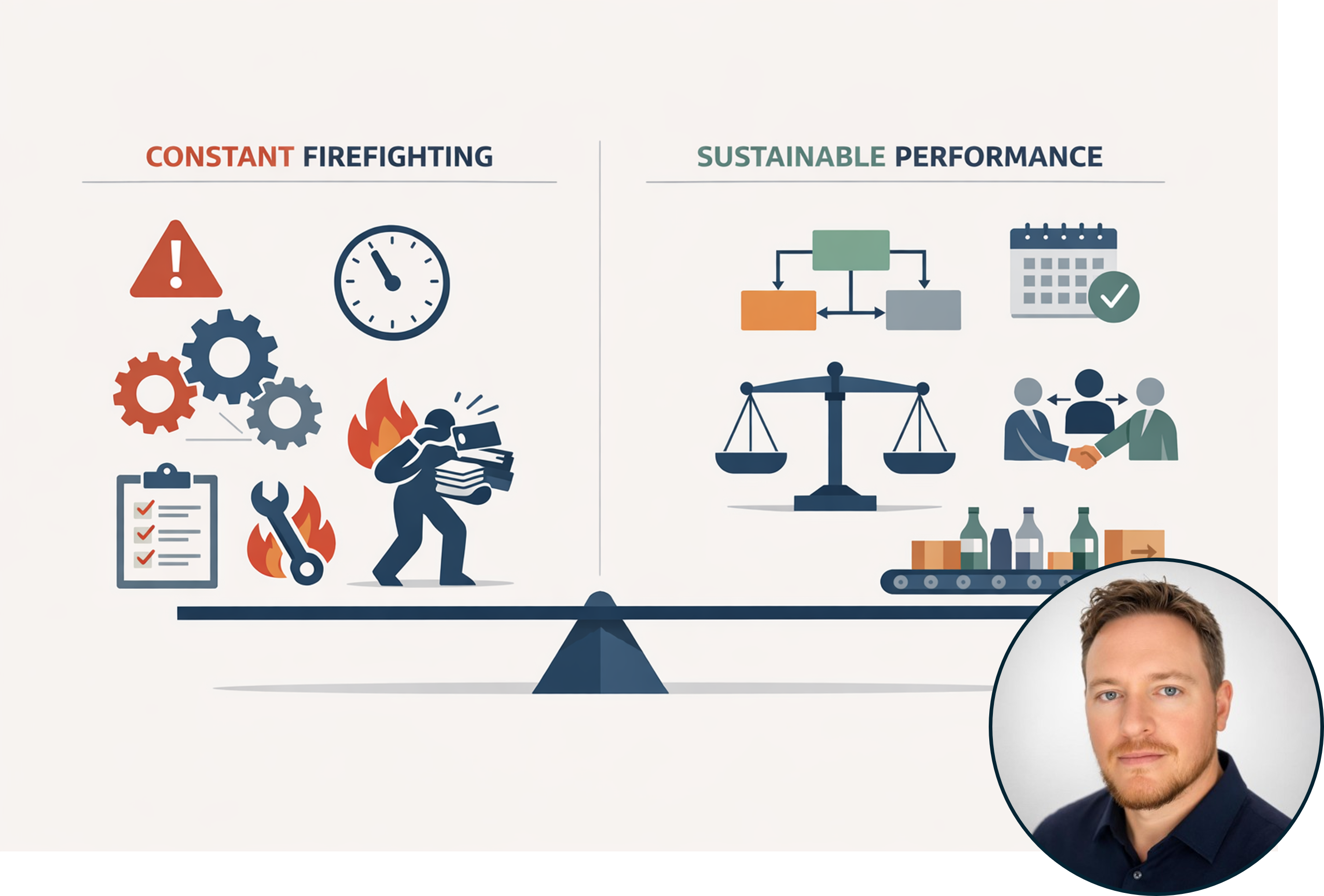
Work-life balance should not be seen as a soft issue or an optional extra. It is part of building a business that can perform reliably and sustainably. For SME manufacturers, this does not mean lowering standards or reducing ambition. It means creating clearer priorities, stronger systems and better ways of working so that performance does not rely on constant firefighting.
That is why I believe the most resilient businesses are not always the ones working the longest hours. Often, they are the ones designed to deliver consistently without exhausting the people at the centre of them.
To find out more, visit: FourSix Services Ltd | Improve Operational Performance Today