

The UK’s coronavirus furlough scheme will finish at the end of October, Chancellor Rishi Sunak has confirmed.
At the No 10 briefing, Mr Sunak also set out how employers will have to start sharing the cost of the scheme.
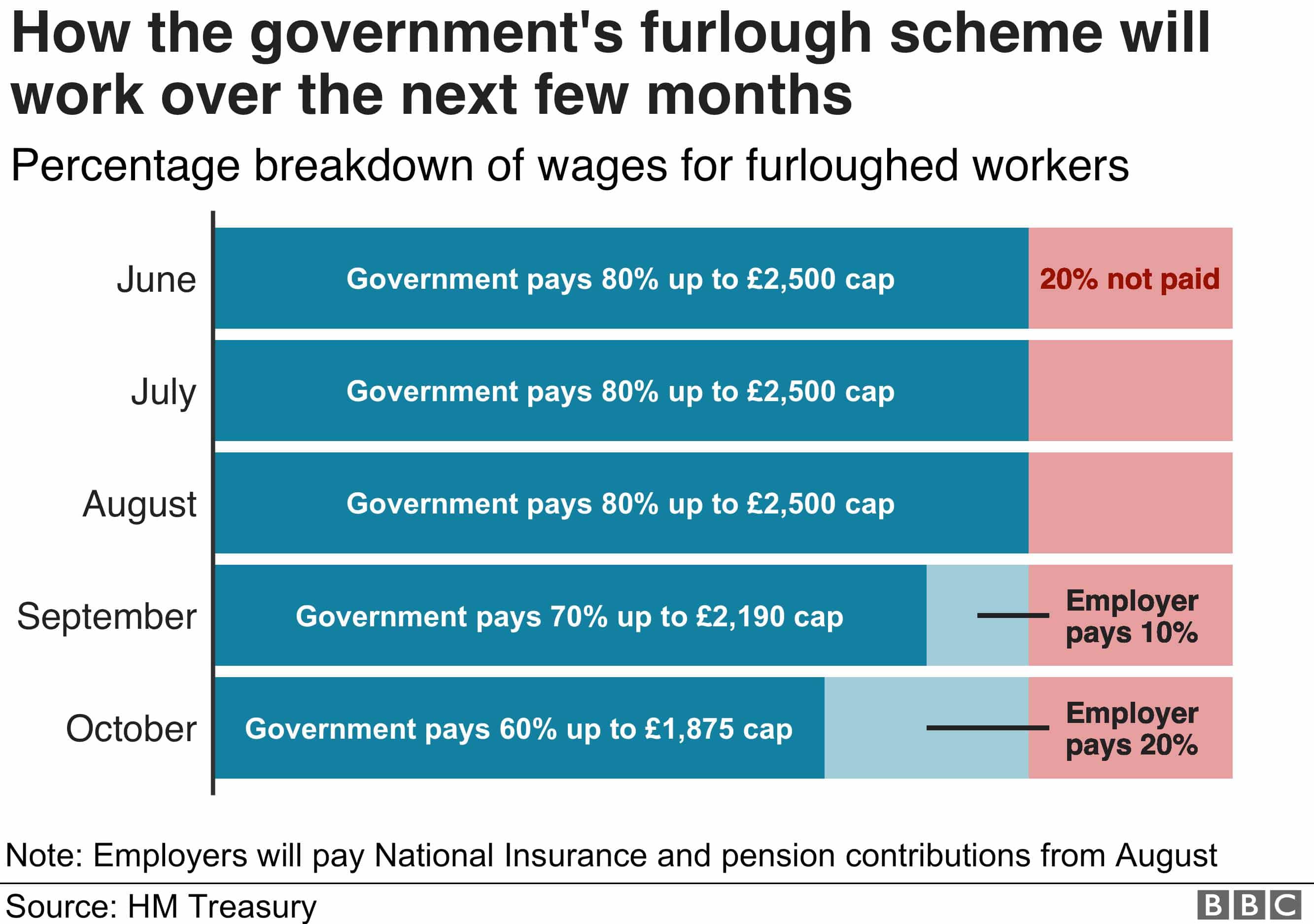
From August, employers must pay National Insurance and pension contributions, then 10% of pay from September, rising to 20% in October.
Also, workers will be allowed to return to work part-time from July, but with companies paying 100% of wages.
Mr Sunak said the Coronavirus Job Retention Scheme will adjust so “those who are able to work can do so”.
Some 8.4 million workers are having 80% of their salaries paid for by the government – up to £2,500 a month – under the scheme, which was originally intended to last until the end of July.
Earlier this month, the chancellor extended the scheme until the end of October, but did not spell out how employers would start contributing.
Under Friday’s changes, furloughed workers will continue to get 80% of pay until the end of October, but by then a fifth of their salary will have to be met by employers.
“Then, after eight months of this extraordinary intervention of the government stepping in to help pay people’s wages, the scheme will close,” Mr Sunak said.
Asked if he would “switch the furlough scheme back on” in the case of a second peak in cases and the reintroduction of lockdown measures, the chancellor said the scheme “as it stands in a national way, in the way that it is designed” will end in October.
“Eight months, as I said, is I think a generous and long period of time,” he said.
How will the scheme change?
From 1 July, businesses will be allowed to bring furloughed employees back part-time, a month earlier than previously announced. The move is aimed to help support people back to work, the government said.
It will be down to individual firms to decide what part-time means. They will be able to set the hours and shift patterns staff will work when they return, but companies will have to pay wages while they are in work.
“Extending the job retention scheme and making it more flexible is key to getting the economy back on its feet,” said Federation of Small Businesses national chairman Mike Cherry.
“By providing employers with the adaptability they’ll require as businesses adjust to a new normal, and bringing forward the flexible furlough launch date, the government is giving hope to small firms right across the UK.”
From 1 August the level of government grant will be reduced “to reflect that people are returning to work”.
Furloughed workers will continue to receive 80% of their pay, but from August it will include a growing employer contribution. It will start with bosses paying NI and pensions in August, plus 10% of pay in September, rising to 20% in October.
The details: How employers’ contributions will increase?
During August the government will pay 80% of wages up to a cap of £2,500. Employers will have to pay NI and pension contributions. For the average claim, that’s 5% of the gross employment costs the employer would have incurred had the employee had not been furloughed.
In September, the government will cut its grants to 70% of wages up to a cap of £2,190. Employers will pay NI and pension contributions and 10% of wages to make up the 80% total up to a cap of £2,500. That works out at 14% of the average gross employment costs the employer would have incurred.
In October the government grant will be cut to 60% of wages up to a cap of £1,875. Employers will pay NI and pension contributions and 20% of wages to make up the 80% total up to a cap of £2,500. That’s 23% of the gross employment costs the employer would have incurred had the employee not been furloughed.
Commenting on the Chancellor’s announcement on additional changes that will be made to the Job Retention Scheme from July onwards, BCC Director General Adam Marshall said:
“The Chancellor has listened to business communities and struck a careful balance that will help many firms bring furloughed staff back to work flexibly over the coming months.
“The gradual reduction in furlough contributions from the Treasury will give businesses additional time to rebuild their income streams and cash flows, and the decision to give businesses maximum flexibility to bring people back part-time will be appreciated.”
“The furlough scheme has helped companies preserve millions of jobs through lockdown, but many firms still face significant uncertainty ahead. On that basis, closing the scheme to new applicants in June feels premature, and risks undermining some of the work already done to preserve businesses and jobs.
“Over the coming months, government will need to be open to providing new and additional support for businesses and staff who are unable to get back to work for an extended period, especially in sectors of the economy facing reduced capacity or demand due to ongoing restrictions.”
On extended support for the self-employed:
“The extension of support for the self-employed will come as welcome relief for those who have seen their livelihoods impacted by the virus. It is right that this group continues to receive similar levels of support to those on PAYE.”

For all of the latest coronavirus advice and guidance, please visit our Coronavirus Support Hub.
Source: BBC News & The British Chambers of Commerce