

Nine in ten manufacturing executives now list supply chain resilience as a top priority, up from under seven in ten the previous year. Tariff pressure, stretched international logistics, and geopolitical uncertainty are driving that shift. For many businesses across Herefordshire and Worcestershire, building resilience into their manufacturing process is no longer a future consideration but an active operational decision.
It raises a practical question that does not always get enough attention: how do you manufacture domestically, at low to medium volumes, before you have justified the tooling investment that mass production demands?
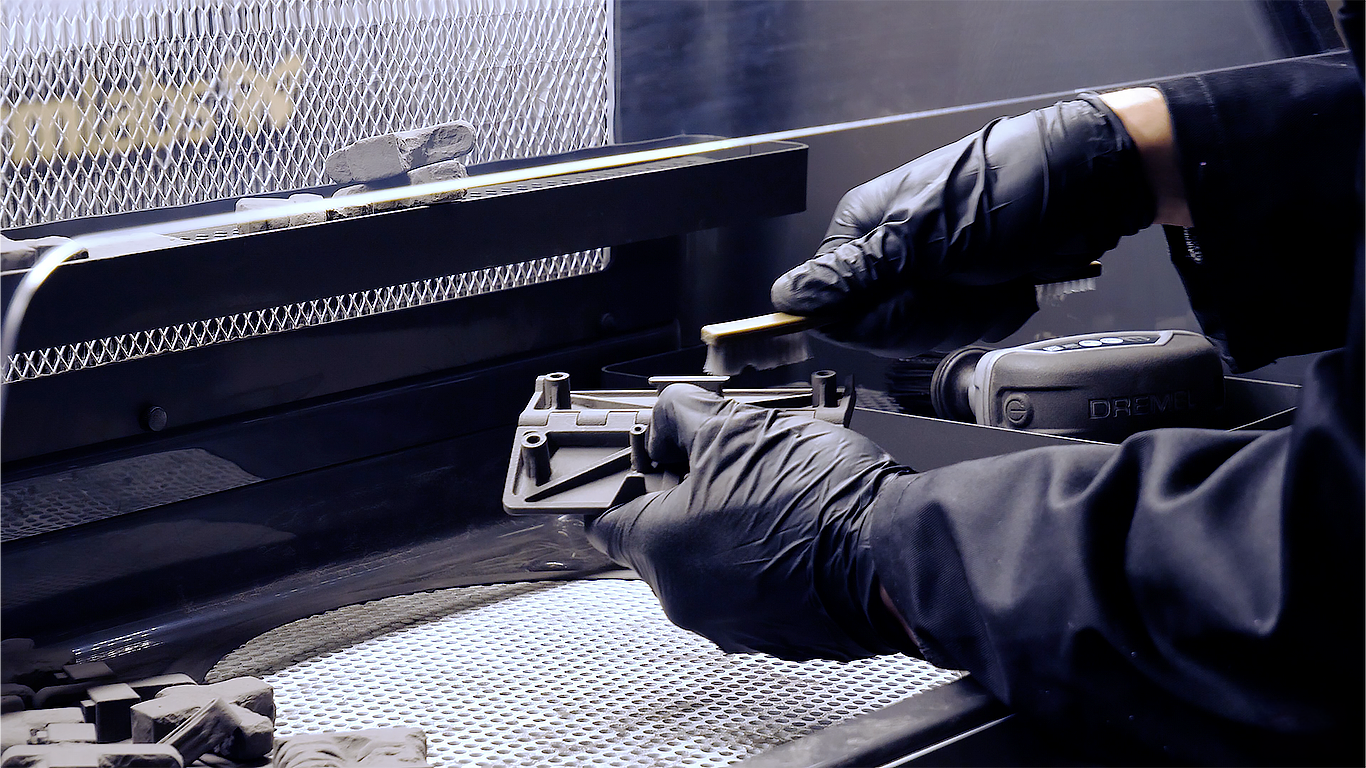
This is a gap we have spent time working through with clients, and our in-house SLS technology has proven to be the answer more often than not. The process fuses nylon powder using a laser, with no moulds and no tooling. What that means in practice is parts with adequate tensile strength, chemical resistance, and dimensional stability across a production run. Not prototypes filling in for the real thing, but components that sit alongside moulded and machined parts on performance, often at a fraction of the lead time.
Over the last couple of years, where this technology has proven most useful is in supporting clients across industrial, medical, and consumer sectors with low to medium volume component and product manufacturing, and in helping businesses manufacture production line spare parts where cost and lead time had been the limiting factors. If you would like to know more about how this technology works and whether it could be relevant to your business, we would be happy to have a conversation.