

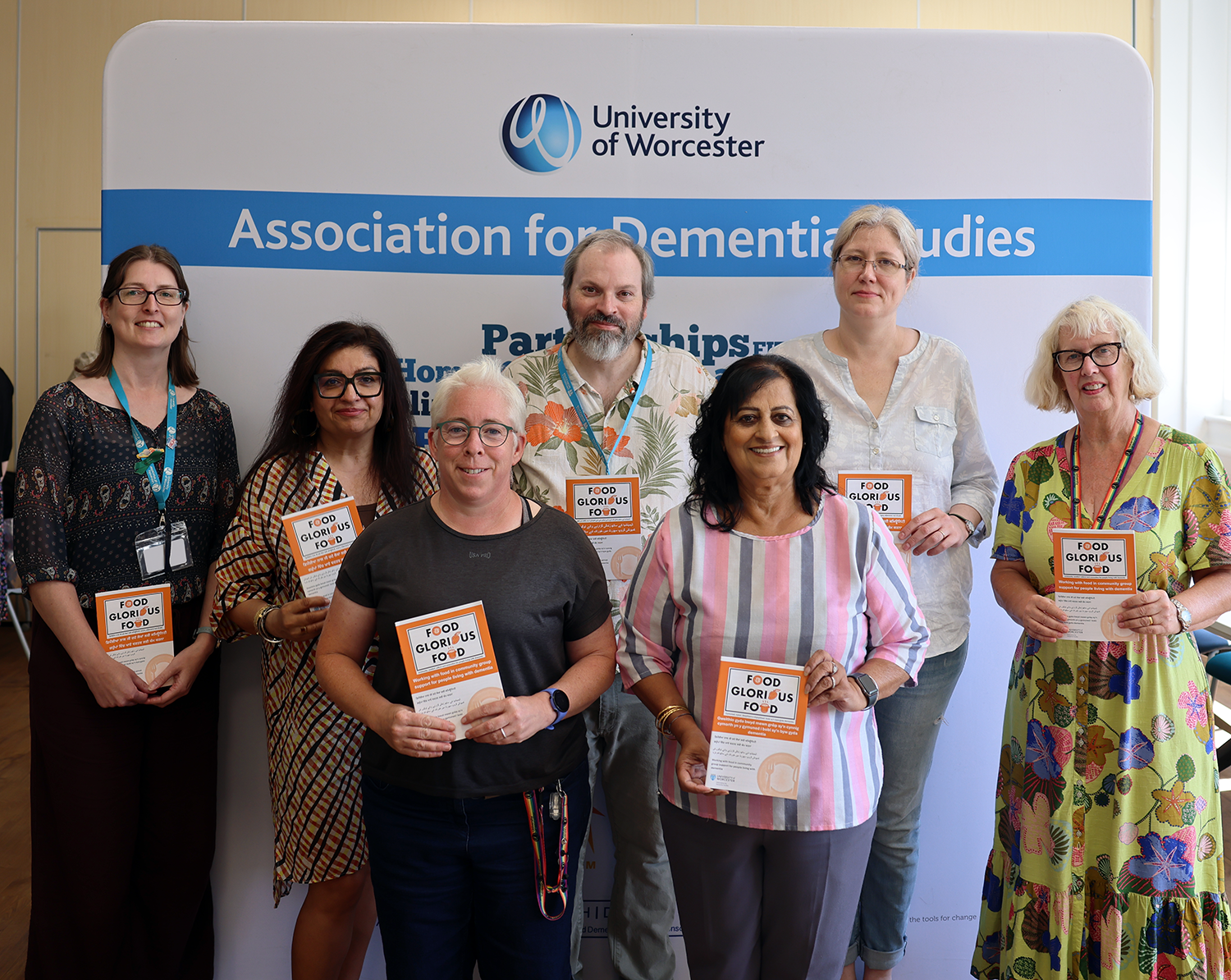
Food can play a powerful role in helping people living with dementia stay connected, share memories and feel at home, according to new research from the University of Worcester.
The findings have led researchers to develop a set of practical resources to help community groups make the most of food-based activities and shared meals.
A 20-month study, led by the University’s Association for Dementia Studies (ADS) and funded by the National Institute for Health and Care Research (NIHR), found that, despite the practical and safety challenges that need careful management, food often acts as a powerful social connector, helping people feel comfortable, valued and included.
Researchers found that sharing food and/or doing activities with food often encouraged conversations that might not otherwise happen, helping people discuss health concerns, share memories about important life events and build social connections.
Using their findings, the research team has now produced a website and leaflet of information and guidance to help groups.
“What we’ve demonstrated in this study is that food is absolutely central to people’s lives and just because you’ve got dementia, it doesn’t stop being central,” said project manager Thomas Morton, ADS Research Associate. “The important thing is that food is a connector. It connects people, it’s a social thing and it’s very important to people’s identity.”
He added: “Incorporating food in some way can be absolutely vital to community group support, so if a community group can do it, then they should.”
The project, Food, Glorious Food, which was the first research of its kind, aimed to understand the value of food for people who attend groups such as Meeting Centres, Dementia Cafés, and groups that support older people of South Asian and Black and Caribbean heritage, and the best approaches.
Researchers worked with dementia support groups in Worcestershire, Herefordshire, the Midlands and London to examine everything from shared meals and snacks to cooking activities and conversations about food.
The study found that in some circumstances food is essential to ensuring people attend sessions and is a way to reach underserved communities.
“People who live with dementia are at very high risk of being socially isolated,” said Mr Morton. “So having something that actually offers foods that people recognise, that makes them feel wanted, feel at home, and that can facilitate conversation is a huge thing.”
He added: “One of the important things about food is it can really destigmatise people’s engagement with support, so they don’t feel like it’s a medical appointment.”
The study also involved colleagues from Cardiff University, University of Wolverhampton and University of Oxford.