

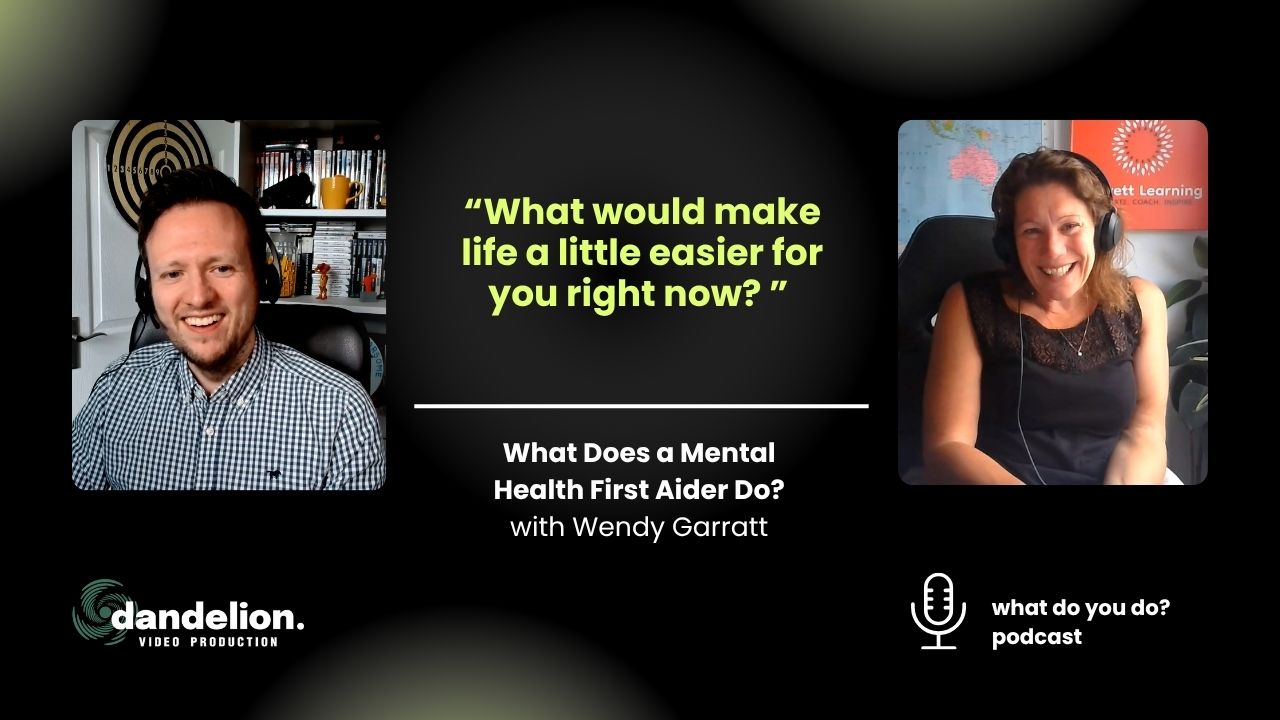
Wendy Garratt of Garratt Learning features in the latest episode of Dandelion Video Production’s What Do You Do? podcast, tackling one of the most overlooked roles in workplace wellbeing.
In the podcast, Wendy talks about the moment where she decided to become a mental health first aider. A colleague had been off work claiming back issues, but when he was jokingly asked about it upon his return, he admitted the truth: “Doctors put me on them happy pills, haven’t they? For depression.” When asked why he hadn’t told his employer, his answer was simple: “Not going to understand, are they?”
“That conversation just sat with me,” says Wendy. “How can we help and support you with your mental health when you can’t be honest about why you’ve been off work?”
The story prompted What Do You Do? podcast host Adam Hanslow-Smith to share his own experiences of not feeling comfortable being honest with his managers about his own mental health challenges, with both Adam and Wendy agreeing that many more people do the same.
A Mental Health First Aider is trained to spot early warning signs – changes in mood, behaviour, sleep, or energy – and provide a confidential first point of contact before problems escalate.
Confidentiality is central to the role. “If somebody approaches me, it stays with me,” Wendy explains. “It doesn’t go any further.” The only exceptions are if someone is at risk of harming themselves or others – and even then, Wendy works with the individual rather than acting behind their back.
For employers who aren’t convinced, Wendy has a direct challenge: “What are your sickness levels like? Are there accidents or errors in your organisation? Because some of those happen because someone’s mind is elsewhere.”
The full episode is available on Youtube, Spotify, Amazon Music and Apple Podcasts.Visit Dandelion’s website for this episode and more.