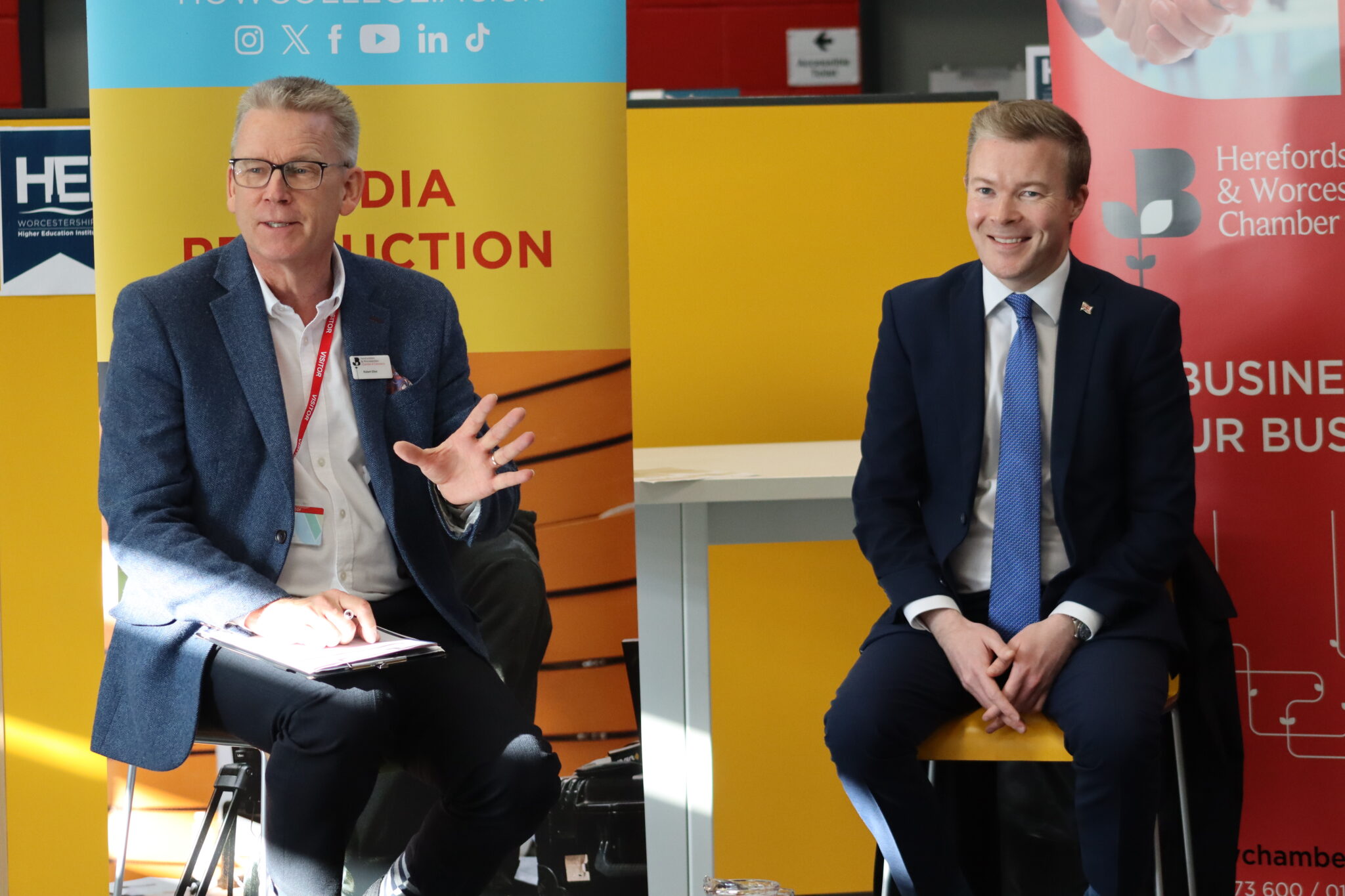
From influencing national policy to solving local business challenges, much of the Chamber’s most valuable work happens behind the scenes. Herefordshire & Worcestershire Chamber of Commerce Director of Business Engagement & Policy Robert Elliot talks to Business Direction about a lesser-known side of his role, championing members’ interests and ensuring their voices are heard locally, regionally and nationally…
When most businesses think about their Chamber of Commerce, they tend to picture networking events, training programmes, business awards and magazines.
What they may not see is the quieter work happening behind the scenes. The conversations with MPs, the meetings with local authorities, the submissions to government consultations and the interventions that can help solve problems for individual businesses and entire sectors alike.
It’s a side of the Chamber’s work that rarely attracts headlines, yet can have a significant impact on the businesses it represents.
For Robert Elliot, that hidden work is an important part of the Chamber’s purpose.
“People know me because I’m out and about talking to businesses every day,” he says. “What they don’t always understand is what we mean by policy, or what that actually looks like in practice.”
At its heart, the Chamber’s policy function is all about representation. As a non-political organisation operating in an increasingly political business environment, the Chamber acts as an independent voice for its members, helping businesses navigate challenges and ensuring their concerns reach decision-makers locally, regionally and nationally.
For many businesses, particularly SMEs, that support can be invaluable.
“Business owners are busy running businesses,” says Elliot. “They don’t necessarily have the time, the contacts or the expertise to navigate planning systems, government consultations or policy changes. That’s where we can help.”
Sometimes that help can be surprisingly significant.
One of the Chamber’s most notable recent interventions involved Worcester Bosch and proposed changes to the Clean Heat Market Mechanism (CHMM).
The policy would have imposed substantial penalties on boiler manufacturers that failed to meet heat pump sales targets. Working alongside industry bodies, MPs and the British Chambers of Commerce, the Chamber lobbied for changes to the proposals.
The result was a softening of the previous governments policy and a significant reduction in the potential financial impact on the business.
But it’s not just huge businesses that benefit from the behind the scenes policy work being carried out by Robert and the rest of the team at the chamber. At the other end of the scale was a challenge faced by a manufacturing business in Ledbury.
A new housing development had introduced a mini-roundabout on a route used by heavy goods vehicles travelling to and from the M50. It would mean the lorries could no longer safely navigate the junction, putting huge pressure on the business.
Quietly, once the issue was raised, the Chamber worked with the developer, local authority and highways teams to help find a solution. Eventually a grasscrete bypass was incorporated into the roundabout, allowing larger vehicles to pass through safely.
It’s a relatively small intervention in the grand scheme of national policy, but for the businesses affected it made a tangible difference.
“It’s one of those examples where most people would never know the Chamber was involved,” says Robert. “But that’s exactly the sort of thing we can help with.”
Other recent work has included supporting businesses facing planning challenges, helping manufacturers raise concerns around steel import tariffs and lobbying on energy-related issues affecting major employers across the two counties.
It’s about identifying barriers to growth and helping businesses find a route through them.
In one case, the Chamber became involved in planning discussions surrounding the expansion of a local manufacturing business after it became clear that decision-makers had not fully appreciated the economic impact of the proposed development.
By personally meeting planning officers and bringing together the business and local authority representatives, the Chamber helped move discussions forward, ultimately gain permissions, and unlock growth opportunities that may otherwise have stalled.
These examples demonstrate the breadth of issues that can fall under a pretty vague policy banner.
For Robert, policy isn’t just about responding to government announcements or commenting on national debates.
“It’s about giving businesses a voice,” he says. “Whether that’s with a local planning officer, a local authority, an MP or a government minister.”
That representation extends well beyond individual cases.
Throughout the year, the Chamber hosts MP forums across the region’s constituencies giving members the opportunity to raise concerns directly with elected representatives.
The Chamber also gathers intelligence through its influential Quarterly Economic Survey (QES), one of the most important but often overlooked tools available to members.
Conducted four times a year, the survey captures the experiences, concerns and expectations of businesses across the region.
Those responses are then combined with data from Chambers across the UK and submitted to the British Chambers of Commerce, creating a powerful national picture of business sentiment.
The findings are used to inform discussions with ministers, civil servants and policymakers in Westminster.
“It’s one of the most direct ways businesses can influence policy,” Robert explains. “People sometimes don’t realise that by taking a few minutes to complete the survey, they’re helping shape conversations taking place at national level.” Herefordshire and Worcestershire Chamber are often in the top three for response levels in the UK beaten only by significantly larger chambers.
The Chamber’s influence is strengthened further through its connection to the wider British Chambers of Commerce network.
Local concerns raised by members can be escalated through specialist policy groups and national forums, giving businesses in Herefordshire and Worcestershire a route into discussions that would otherwise be difficult to access.
The Chamber is also represented on national policy groups through members including Chris Walklett of Bishop Fleming, who sits on the British Chambers of Commerce Business Taxation Panel, and Ben Mannion of Hewett Recruitment, who serves on the People and Work Panel.
Together, these links help ensure that local business concerns contribute to wider national policy conversations.
Yet despite the successes, Robert believes many businesses remain unaware of the support available to them via their chamber memberships.
“Sometimes members only think of the Chamber as the organisation that runs events, publishes the magazine or hosts awards ceremonies,” he says. “All of those things are important, but there’s a lot more happening behind the scenes.”
That hidden work is becoming increasingly important as businesses navigate rising employment costs, energy prices, planning challenges and changing international trade rules.
The Chamber is currently supporting members on issues ranging from steel tariffs and energy costs to planning applications and business rates concerns.
Many of those discussions begin with a simple conversation.
For businesses looking to become more involved, Robert encourages them to engage with the chamber’s MP forums, complete the Quarterly Economic Survey, subscribe to policy updates and, most importantly, raise issues with the team when they arise.
“The more we hear from businesses, the stronger the picture we can build,” he says. “If businesses tell us what’s happening, we can identify trends, build evidence and take those concerns to the people who can make a difference.”
Ultimately, that’s what the Chamber’s policy work is all about.
It may not always be visible. It may not always attract attention. But from influencing national policy to helping redesign a roundabout in Ledbury, it’s often the work that members don’t see that can make the biggest difference.